
Marketing in the Late 1990s: How Brands Reached Customers Before Social Media
Remember a Time Before Likes, Shares, and Followers?
When people listened to their favorite radio stations on the way to work, waited for the morning newspaper, and congregated around the television in the evening. Influencers, hot hashtags, and most definitely no “boost post” option were absent. Nevertheless, companies continued to develop strong brands and devoted clientele. They just approached it in a different way.
The Marketing World in the Late 1990s
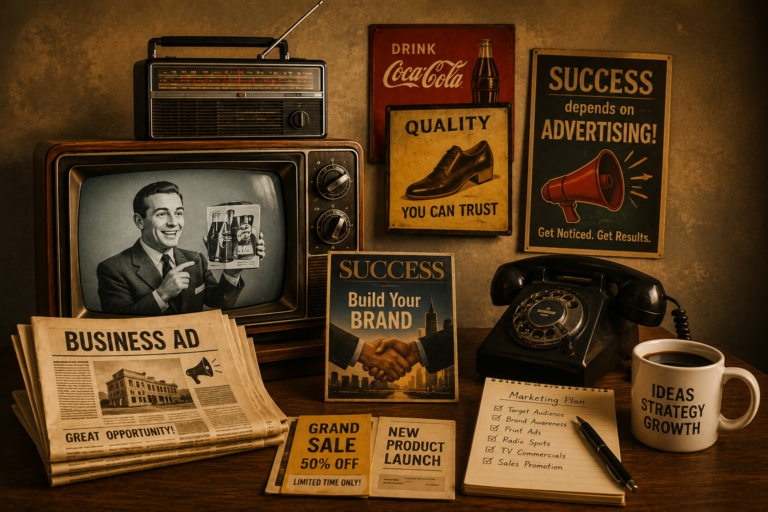
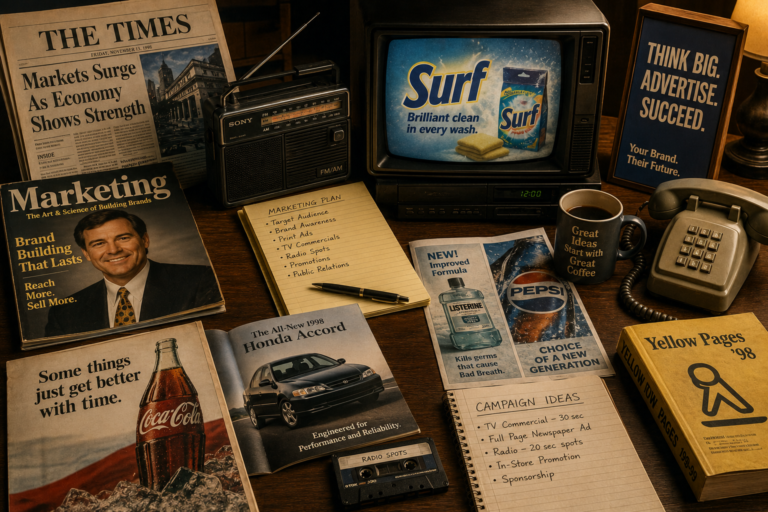
The last years before the internet totally changed advertising were the late 1990s. Even though websites were starting to exist, most individuals didn’t use them on a daily basis. To promote their message, businesses continued to rely largely on traditional marketing. Tracking clicks and chasing algorithms were not the goals of marketing. Rather, it concentrated on establishing credibility, making memorable ads, and using mass media to reach as many people as possible. Analytics and dashboards were not used to gauge success. Increased sales, customer satisfaction, and brand recall were used as metrics.
Television Was the Ultimate Advertising Platform
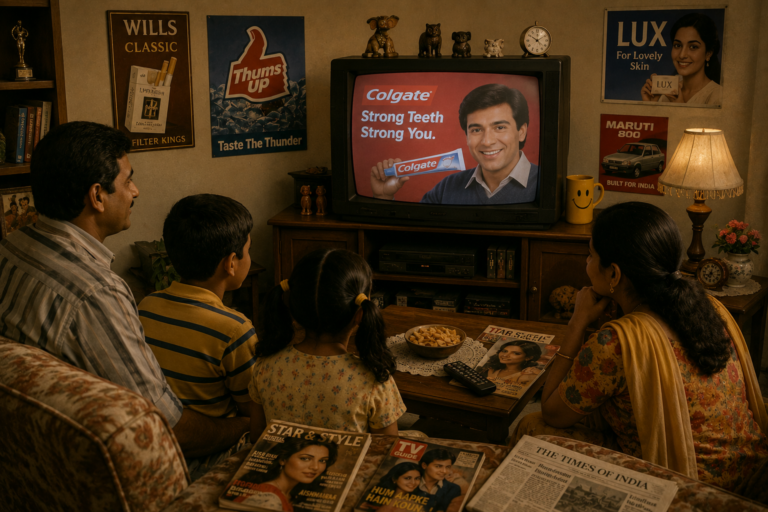
Television was the place to go if a business desired national notice. TV advertisements are one of the best ways to introduce new items because families frequently watch popular shows together. A memorable slogan, an inventive commercial, or a catchy song could stick in people’s minds for years. Long before internet marketing existed, television advertising helped many famous firms establish their reputations.

Newspapers and Magazines Were Trusted Sources
Newspapers and magazines played a significant role in daily life prior to the rise of internet news. Companies ran ads to promote local events, seasonal deals, and new items. They might target readers who are interested in fashion, business, technology, sports, or lifestyle, depending on the newspaper. People took the time to properly read these periodicals, unlike today’s scrolling feeds, which increased the likelihood that advertisements would be seen.
Radio Connected Brands with Local Communities
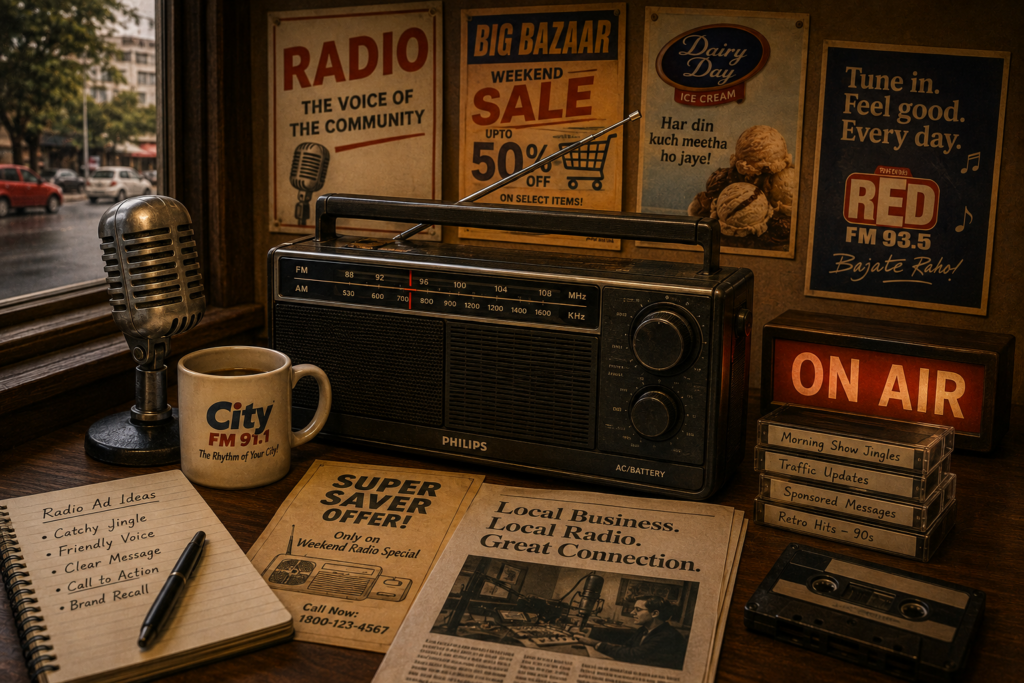
Local marketing was heavily reliant on radio. Radio commercials were a part of daily life, whether people were listening at home or driving to work. Companies frequently produced memorable audio advertisements that listeners could quickly identify or sponsored shows. In many areas, radio is still a useful marketing medium today.

Billboards That Couldn't Be Skipped
Imagine not seeing a single digital screen while traveling on a crowded route. Rather, there were large billboards with memorable taglines, vibrant designs, and strong messaging. In contrast to today’s online advertisements, which consumers can ignore, outdoor advertising requires attention just by virtue of its placement. A compelling message was all that was needed for a superb billboard; animation was not necessary.
FINAL THOUGHTS
Marketing in the late 1990s serves as a reminder that knowing people is just as important to good advertising as technology. Before likes, followers, and algorithms, brands relied on originality, narrative, and sincere connections with their customers. These ageless ideas continue to serve as the cornerstone of effective marketing today. As digital marketing develops further, reflecting on the past enables us to recognize how far the field has come and why human connection has always been the key to effective marketing.